Live Market
 Market Action
 Reports and Data
 Statistics
 MCX iCOMDEX
 Bullion
 Base Metals
 Energy
 Agri Commodities
 Awareness Corner
 Products
 Market Data
 Training
 Media
 Knowledge Series
 Publications
 Resources
 Become a Member
 Existing Member
 Notice board
 Member Compliance
 Trading & Surveillance
 Clearing & Settlement
 Delivery
 Warehousing & Logistics
 Spot
 Compliance
 Documents
 Information for clients
 Technology
 Connectivity
 CTCL
 Data Feed
 Videos Gallery
 Press
 Advertisement
 Media Kit


The origins of cardamom are unknown, yet it is believed that it grew as wild herbs in the monsoon forests of the Western Ghats in southern India. Cardamom finds its first mention in the Charak Samhita (an early text on Ayurveda) written somewhere between 2nd century BC and 2nd century AD. The Charak Samhita says that cardamom is an important constituent in many medicines. Later, the spice finds mentions in many Sanskrit texts as being used in rituals and ceremonies.
Read More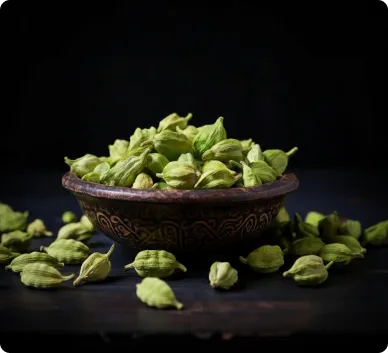
Overview
The origins of cardamom are unknown, yet it is believed that it grew as wild herbs in the monsoon forests of the Western Ghats in southern India. Cardamom finds its first mention in the Charak Samhita (an early text on Ayurveda) written somewhere between 2nd century BC and 2nd century AD. The Charak Samhita says that cardamom is an important constituent in many medicines. Later, the spice finds mentions in many Sanskrit texts as being used in rituals and ceremonies.
Small cardamom is grown in India, commercially in plantations, under the shade of tall forest trees at moderately high altitudes in the evergreen forests of the Western Ghats. India is a major producer and consumer of cardamom, holding the second spot in world production; Guatemala taking the top slot. With no domestic consumption, Guatemala also becomes the largest exporter in the world.
Cardamom is widely used as spice, renowned for its flavour and aroma. In south Asia, green cardamom is largely used in traditional Indian sweets and in the making of tea; in Arabia it is used in the preparation of 'gahwa'—a strong cardamom coffee that is used to welcome guests; in northern Europe, it is an essential ingredient in sweet foods. Therapeutically, cardamom finds varied uses, such as in the treatment of teeth and gum infections, digestive disorders, throat trouble, and skin problems.
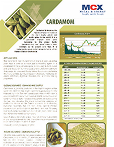
In the market, risk management techniques are critical for key stakeholders of cardamom, such as producers, exporters, marketers, and processors. Given an uncertain future, modern techniques, and strategies, including market-based risk management financial instruments, such as ‘Cardamom Futures’, offered on the MCX platform can improve efficiencies and consolidate competitiveness through price risk management.
Cardamom
Cardamom is a premium spice used worldwide for its intense aroma and unique taste.

Contract Specifications

Factors Influencing the Market


Freshness, colour, aroma, and size of the crop
Production in competing countries, mainly Guatemala
Annual production in India
Year-ending stocks at India and Guatemala
Seasonal variations and time of arrival of new crop in the market
Domestic consumption, which is influenced by festivals


Disclaimer: he users are also advised to refer to latest circular issued by the Exchange.
Documents

Circulars
-
![pdf]()
09 November 2026
Guidelines in pursuance of amendment to SEBI KYC (Know Your client) Registration Agency (KRA) Regulations, 2011
-
![pdf]()
30 October 2026
Futures and Options Contracts Launch Calendar for the month of November 2026
-
![pdf]()
30 October 2026
Commencement of Futures Trading in Gold Ten (10 gram) April 2027 Contract