Live Market
 Market Action
 Reports and Data
 Statistics
 MCX iCOMDEX
 Bullion
 Base Metals
 Energy
 Agri Commodities
 Awareness Corner
 Products
 Market Data
 Training
 Media
 Knowledge Series
 Publications
 Resources
 Become a Member
 Existing Member
 Notice board
 Member Compliance
 Trading & Surveillance
 Clearing & Settlement
 Delivery
 Warehousing & Logistics
 Spot
 Compliance
 Documents
 Information for clients
 Technology
 Connectivity
 CTCL
 Data Feed
 Videos Gallery
 Press
 Advertisement
 Media Kit


The first cottonseed oil commercially produced was used primarily as fuel in lamps to replace whale-oil and as a lubricant for machinery. By the mid-1800, cottonseed oil production was increasing. After the American Civil War from 1866 to 1877, cotton acreage had expanded significantly, resulting in an increase in cottonseed oil production.
Read More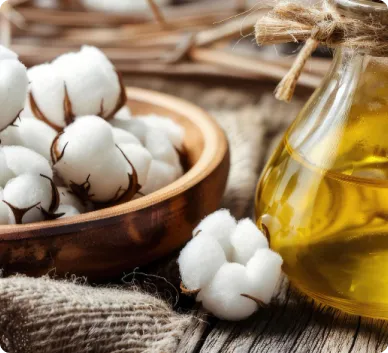
Overview
The first cottonseed oil commercially produced was used primarily as fuel in lamps to replace whale-oil and as a lubricant for machinery. By the mid-1800, cottonseed oil production was increasing. After the American Civil War from 1866 to 1877, cotton acreage had expanded significantly, resulting in an increase in cottonseed oil production.
In the United States, cottonseed oil was developed and marketed by Procter & Gamble as a creamed shortening-Crisco as early as 1911. Ginning mills were happy to have someone haul away the cottonseeds. (Source: Pennsylvania Center for the book.
Cotton crops dominated the South during the late 18th and 19th centuries; therefore, it is natural to think that cottonseed oil is the origin in a Southern state such as Mississippi, South Carolina, Georgia. However, the birth of cottonseed oil began in the town of Bethlehem, Northampton Country.
India consumed around 1.34 million metric tons of cottonseed oil in 2023-24. It is commonly used in the production of food products including salad oils and margarines. Cottonseed oil is normally sold refined which is virtually free of gossypol and safe for consumption. Cottonseed oil may be used in some foods such as bakery products and fried snacks. Cottonseed oil has a better nutritional profile with its lower saturated fat content and higher polyunsaturated fat. Other than in food, cottonseed oil had a wide use as an insecticide.
China produced around 1.35 million metric tons of cottonseed oil and consumed around 1.34 million metric tons in 2023-24.
Cotton Seed Wash Oil
Cottonseed oil is a light, neutral edible oil extracted from cotton seeds.
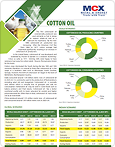

Contract Specifications

Factors Influencing the Market

International factors

China and India are the major producing and consuming nations. Adverse weather conditions of cotton output influence the prices.
Since soy oil competes with palm oil in the global vegetable oil market, global production, consumption and ending stocks of soya bean and other oilseeds have direct bearing on prices of edible oils including cotton oil.
Crude oil movement also affects prices, as significant rise in energy prices lead to demand for alternate fuels like biofuel. Vegetable oils are also used in the production of biofuel.

Domestic factors
Domestic oilseed production
Ending stocks
Government Policies
Economy – well-being of final consumer

Disclaimer: The users are also advised to refer to latest circular issued by the Exchange.
Documents

Circulars
-
![pdf]()
09 November 2026
Guidelines in pursuance of amendment to SEBI KYC (Know Your client) Registration Agency (KRA) Regulations, 2011
-
![pdf]()
30 October 2026
Futures and Options Contracts Launch Calendar for the month of November 2026
-
![pdf]()
30 October 2026
Commencement of Futures Trading in Gold Ten (10 gram) April 2027 Contract